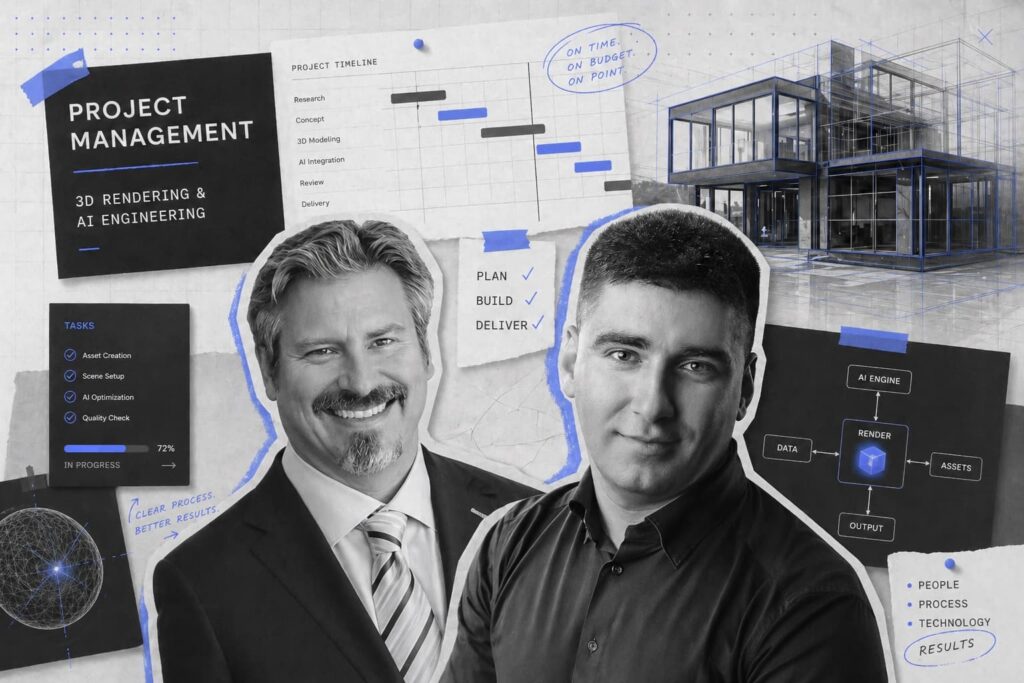
We’re continuing our editorial series featuring agencies from our listings, exploring how different teams approach client relationships, communication, and project workflows. In this edition we’re looking into the operational side of agency work – from hiring and quality control to managing scope and timelines. We spoke with Diffco, a San Francisco-based company specializing in AI, custom software development, and staffing services, and Studio2a, a 3D rendering studio creating architectural, product, and interior visualizations for brands worldwide about their approach to some of the key challenges behind delivering consistent, high-quality work.
What Makes a Strong Hire
Building the right team is one of the most critical factors in delivering strong work. But beyond skills and experience, agencies often look for qualities that ensure long-term collaboration and adaptability.
What specific criteria do you use when hiring designers or developers, and what’s an immediate red flag that disqualifies a candidate?
Adam Kruvand, Principal Creative Director at Studio2a:
We look at experience, the quality of the portfolio, and overall practical fit – things like language, time zones, and work style all matter when it comes to collaboration. It’s not just about talent, but how well someone integrates into the way we work. An immediate red flag for us is overly aggressive outreach, like persistent or pushy emailing, which can signal a lack of professionalism or awareness.
Vadim Peskov, CEO at Diffco:
We look for people who are curious, proactive, and constantly improving their craft. Designers and developers on our team need to stay on top of new tools, workflows, and industry shifts, because the pace of change in our field is extremely fast. A strong candidate is someone who experiments, learns quickly, and integrates new technologies into their daily work. A major red flag for us is when someone isn’t using AI as part of their workflow. Today AI is a core productivity tool across design and development. If a candidate isn’t actively learning, testing and incorporating AI tools into their process, it usually means they’re already falling behind – and that mindset doesn’t align with how we operate.
Managing Revisions Without Scope Creep
Revisions are a natural part of any project, but without the right structure, they can quickly lead to scope creep and misaligned expectations.
How do you structure revisions and amends in your contracts to prevent scope creep while keeping clients satisfied?
Adam: Our process is collaborative, so the client has more input and ownership throughout the process. Minor tweaks are part of this process, so we rarely need to push back on those. Major changes trigger a change order based on an hourly rate or a new project phase altogether. Because expectations are set early, most clients understand and are comfortable with this structure.
Vadim: For SDLC projects, we work exclusively on a T&M basis. In product development, scope naturally evolves as the product grows, new insights appear, and priorities shift. Trying to lock everything into a rigid revision structure usually creates unnecessary friction between teams and clients. With T&M, revisions and adjustments are simply part of the ongoing process rather than something that needs to be negotiated each time. This removes the typical back-and-forth around amendments and allows the team to focus on progress and outcomes. The client maintains flexibility, and the project can adapt in real time as the product matures.
How Teams Stay Aligned on Quality
When multiple people are involved in a project, maintaining consistent quality becomes both more important and more challenging.
What internal process do you use to ensure consistent quality across projects when multiple team members are involved?
Adam: We rely on a standardized internal process that’s been refined over years of creating assets and delivering projects. This structure helps ensure consistency regardless of who is working on a given task. Before anything reaches the client, it goes through an internal review stage, which acts as a quality control checkpoint and keeps our output aligned with our standards
Vadim: Consistency comes from structure and accountability. Every project follows shared technical and design standards that the whole team adheres to. We also conduct regular code reviews to ensure best practices are followed and that the quality of implementation stays high across the board. In addition, each project has a senior lead responsible for overall quality and decision-making. This person acts as the owner of the final output and ensures that the work from multiple contributors remains cohesive. Before anything is presented to a client, we also run internal demos so the team can review the work collectively and catch issues early.
When Projects Start to Drift
Even well-planned projects can go over budget or timeline. Understanding why this happens is key to improving processes and setting more realistic expectations.
What is the most common reason projects go over budget or timeline, and how have you adjusted your process to prevent that?
Adam: Some delays are inevitable. Ours is a collaborative workstyle, so we set the feedback expectation with the client pretty early on. However, there are usually more factors on the client side that interfere with our timeline. We mitigate this by asking upfront who is involved in the process and what problems may occur. This helps us predict a more accurate project delivery schedule and budget.
Vadim: The most common reasons are unclear requirements at the start and strategic pivots that happen during development. As products evolve, new ideas emerge, and priorities shift, which can easily affect both timelines and budgets. To manage this reality, we rely on the T&M model and maintain close communication with clients through frequent weekly syncs. These regular check-ins allow us to surface changes quickly, adjust priorities when needed, and ensure that nothing drifts too far off track before it’s addressed.
Lessons from Client Acquisition
Finding and winning the right clients is an ongoing challenge for most agencies. Not every strategy works – and often the most valuable insights come from what didn’t go as planned.
What have you tried for client acquisition that didn’t work, and what did you learn from it?
Adam: Even after 25 years, we’re still experimenting with finding a reliable, semi-automated approach to lead generation and CRM. It’s something we’ve tested in different ways, but nothing has fully clicked yet. If anything, the takeaway is that there’s no one-size-fits-all solution, and it’s an ongoing process of trial, adjustment, and learning – so if you’ve figured it out, we’d love to hear it!
Vadim: We experimented with outbound sales targeting large enterprise projects, but the results weren’t particularly effective for us. The sales cycles in that segment are extremely long, procurement processes are complex, and conversion rates are relatively low. What we learned from that experience is that our strongest growth comes from warm introductions and demonstrating value quickly. Rather than relying on cold outreach, our approach works best when relationships already exist and we can prove our expertise through direct collaboration.
Final Thoughts
From hiring and internal processes to managing scope and acquiring clients, the operational side of agency work plays a crucial role in delivering successful projects.
As Diffco and Studio2a show, there’s no single way to approach these challenges – but clarity, structure, and continuous adaptation remain consistent themes. Whether it’s building the right team or refining how projects evolve over time, these decisions ultimately shape both the work and the client experience.
Explore More Agencies
Looking for the right creative or marketing partner? Norobots connects brands with trusted agencies, designers and startups from around the world – explore the listings and find the collaborators that fit your needs. And if you’re an agency or designer, join our listings to showcase your work, increase your visibility and become part of our growing network of trusted businesses.